
Possible Directions · Kailen.com
A quieter everyday carry brand
Your name on the bag people reach for every morning.
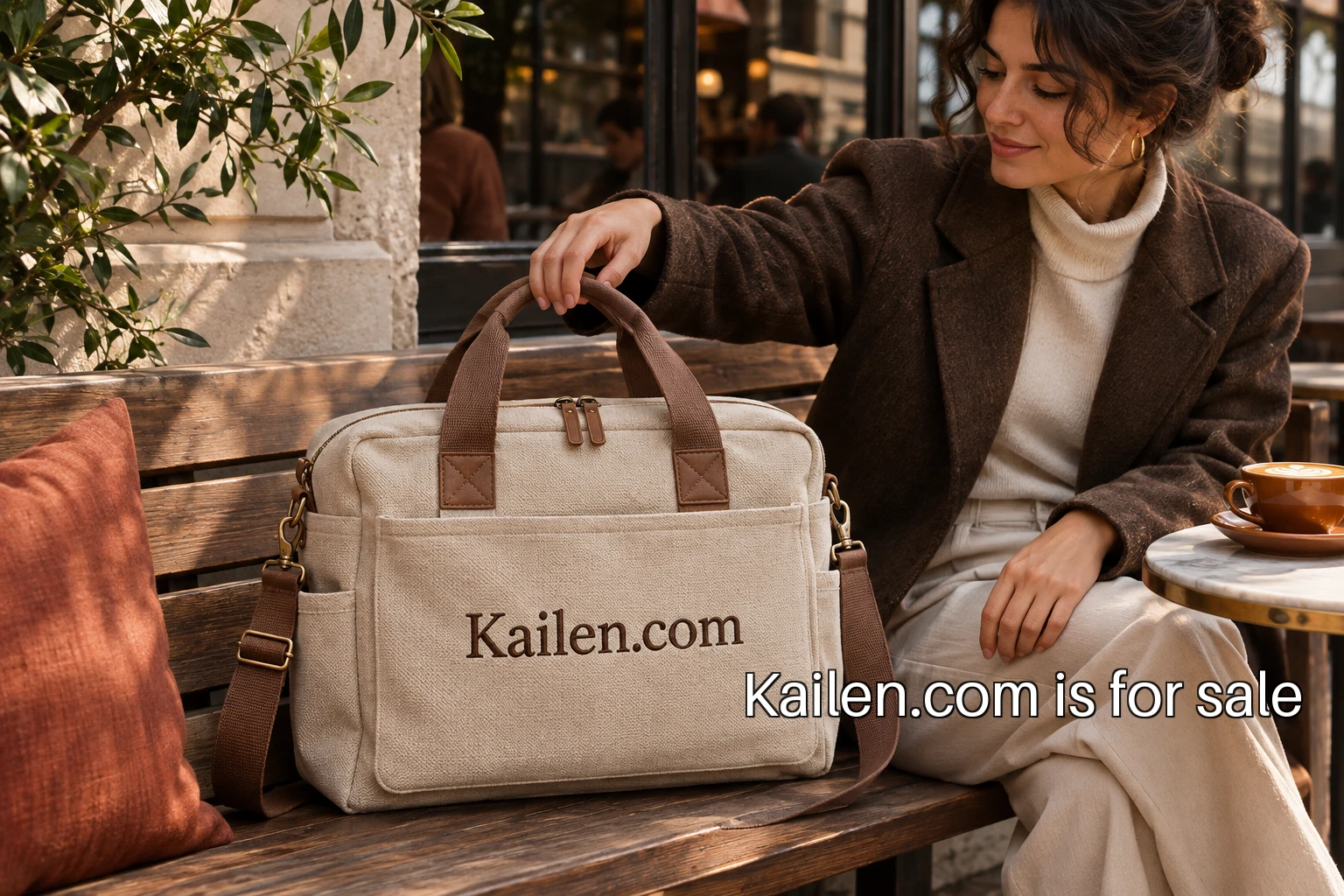
An everyday carry collection can begin with a very ordinary moment: leaving the house with the things needed for the day. A laptop, a lunch container, keys and a light layer create a useful design brief. Kailen could become the name on a focused bag range built around that moment, with a small set of accessories added only when they make the routine easier.
I would start with one commuter bag and one clear customer occasion. Picture someone who travels by train, walks the final stretch and puts the bag beside a desk. That description is more useful than a broad promise to suit every lifestyle. It gives the first prototype a job and gives the founder a reason to choose one handle length, one opening and one interior arrangement.
Write the load before drawing the bag
Gather the objects the proposed customer actually carries. Measure the largest item and photograph the full load laid out together. Ask what must stay upright, what needs quick access and what should never sit against a damp umbrella. Use those answers to make a simple packing list. The list becomes the first version of the product specification.
There is no need to add a pocket for every object. A fixed compartment may help with a laptop, while an open section offers more flexibility for the rest. Try an easy-to-remove pouch before committing to another sewn divider. Check how quickly someone can pack, find an item and put the bag away at the end of the day.
Make the first sample plain enough to change. Temporary seams and inexpensive material can help a team compare two shapes without becoming attached to a finished-looking object. Put the intended load inside each version. Look at the base when the bag is full, the opening when it is on a bench and the way the handles behave when it is lifted with one hand.
Let carry tests choose the details
Recruit a small group whose routines match the chosen occasion. Give each person the same questions after a few normal journeys. Which item was hard to reach? Did the bag stay upright when set down? Was there a point where a fastening or handle got in the way? Ask for a photograph of the packed bag rather than relying only on a rating.
Keep a record of the sample version, the load and the route taken. If one person carries a much heavier load than the others, that context matters. Separate observations from proposed solutions. “The bottle tipped into the main compartment” is an observation; “add a rigid bottle pocket” is one possible answer. A different base or removable sleeve might work better.
Repair the repeated problems before adding colors. A beautiful fabric will not resolve an awkward opening. Once the bag works, compare the material options in the conditions that matter: against a coat, under a desk and after the kind of handling expected during a normal week. Ask suppliers for care guidance and test the proposed instructions on samples.
Make the first range easy to explain
A first release could contain the main bag, one small pouch and a replacement strap if the design uses one. Each item needs a reason to exist. The pouch might hold the small things that otherwise move between compartments. A second bag size should wait until testing shows a distinct need, rather than simply filling an empty space in a range diagram.
Choose a limited material palette so samples can be compared properly. Oat canvas and a darker lining might form one direction; a smoother woven fabric and muted hardware could form another. Photograph both with the same load and in the same light. A founder should be able to say why the chosen combination belongs to the customer occasion.
The Kailen identity could remain quiet on the outside, with a clear label inside and a consistent mark on packaging. The product page would show the bag open, packed and carried, alongside dimensions and care information. That is a useful first expression of a brand ready for a retail shelf: the name, the object and its explanation all agree.
Plan a first run that can teach you something
Before placing a production order, write down the decisions that are still uncertain. These might include the best-selling color, the usefulness of the pouch or the amount of internal organization. Choose a first run and sales approach that let the team learn about those questions while maintaining the quality standard set by the samples.
Ask potential production partners how they handle sample approval, material substitutions and defects. Put agreed details into a specification with photographs and measurements. Decide who will inspect the finished goods and what will happen if a seam, fitting or dimension differs from the approved sample. This is a conversation to complete before boxes arrive.
For a first sales presentation, show the bag in the routine it was designed for. A short sequence from packing to commuting to setting it beside a desk can be more useful than a row of isolated beauty shots. Collect questions from those presentations and improve the product information before broadening the launch.
A name for the things that go with you
For a future owner of Kailen.com, the practical next step would be a prototype and a small group of commuting testers, with one agreed load and a clear way to record problems. From there, the founder can develop a collection whose details come from everyday use, carrying one name from the first sample to the bag that leaves home each morning.
For bags, objects and small stays